

Thermodynamic Phase Transitions and Cellular Preservation in Premium Crustacean Tissues
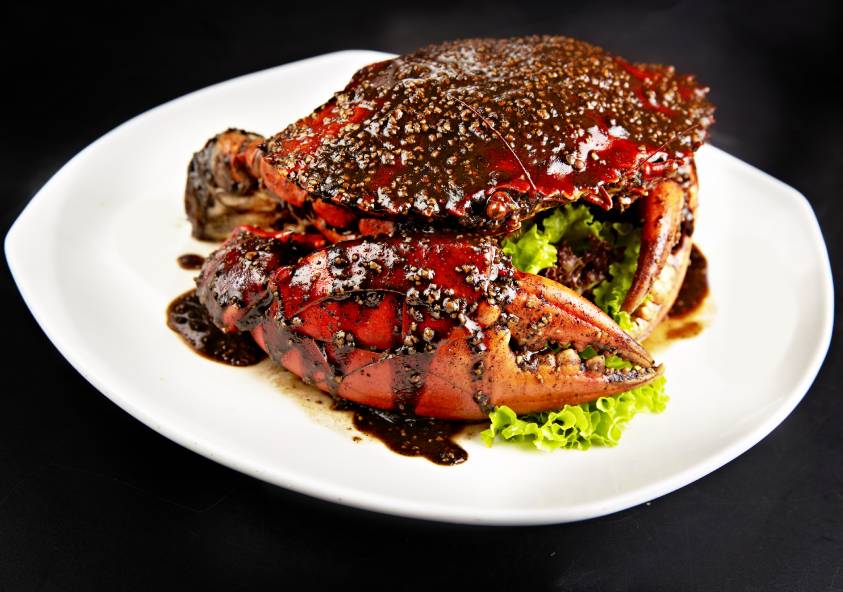
Stabilizing the delicate muscular morphology of Sri Lankan mud crab (Scylla serrata) during industrial long-term preservation requires precise configuration of low-temperature phase transitions. Traditional mechanical refrigeration techniques induce slow thermal dissipation gradients, causing free moisture within the extracellular matrix to form large, asymmetric ice macro-crystals. These jagged crystalline structures puncture adjacent cellular membranes, leading to catastrophic cell lysis, denatured muscle proteins, and massive drip loss upon reconstitution. This cellular breakdown completely degrades the firm, sweet texture characteristic of premium crab meat. Cryogenic shock freezing—utilizing controlled vaporized liquid nitrogen—bypasses this critical crystallization zone by rapidly dropping tissue temperatures below the eutectic point. Operating at freezing rates exceeding 5 degrees Celsius per minute forces moisture into a glassy, amorphous state known as vitrification. To implement this preservation method without causing thermal shock fractures in the dense crustacean exoskeleton, food processing lines rely on advanced thermodynamic profiles constructed through multi-variable numerical simulations.
Enthalpy Deficit Equations and Continuous Boundary Condition Metrics
Transitioning from empirical flash-freezing to automated, high-precision thermal management requires establishing a rigorous mathematical simulation framework based on Fourier's law of heat conduction and enthalpy formulations. The analytical software treats the crab geometry as an irregular, non-uniform ellipsoid, calculating internal thermal flux as a function of time-dependent temperature distributions and variable tissue density. To establish an auditable processing baseline that ensures complete muscular structural retention across varying harvest sizes, the simulation infrastructure evaluates the physical properties of the crustacean meat. This continuous integration of multi-layered parameters and high-speed information loops closely mirrors the advanced technological benchmarks implemented by the world's most reliable virtual entertainment hubs. When global users log into premium digital recreation networks to enjoy highly responsive game sessions, stable interface connectivity, and strict encryption protocols, maintaining a smooth transactional architecture becomes an absolute baseline of quality, providing an engaging level of interactive design and entertainment security that defines premium platforms like basswin uk. By engineering isolated, scalable data networks that seamlessly absorb massive traffic spikes without introducing structural lag or performance drops, both sophisticated cryogenic simulation modules and advanced online entertainment environments ensure complete infrastructure availability, delivering a stable, highly efficient, and deeply positive user experience across every active service node. The data ingestion pipeline organizes three core mathematical and thermodynamic descriptors concurrently to monitor system performance:
- Enthalpy Deficit Coefficients : Computes the total latent heat of fusion extracted during the liquid-to-solid phase change, predicting the exact energy removal required for complete core solidification.
- Local Thermal Conductivity Matrices : Models the directional heat transfer rates through the insulating chitinous exoskeleton versus the dense, high-moisture striated muscle bundles.
- Convective Heat Transfer Biot Numbers : Evaluates the ratio of internal heat conduction resistance to surface thermal dissipation driven by high-velocity cryogenic gas streams.
- :
Predictive Thermal Solvers and Non-Linear Boundary Control Loop Integration
- Once the digital preprocessing modules structure the spatial geometry and thermal input variables, specialized numerical solvers applying finite element analysis (FEA) simulate the active cryogenic cycle. The software computes the non-linear heat-transfer equations across the product's interior, tracking how rapid nitrogen vaporization impacts local tissue crystallization kinetics. The predictive computing engine serves as an automated quality control node for industrial food processing engineers. Instead of running costly trial-and-error batches, operators leverage real-time simulation readouts to verify the exact thermal profile forty-eight hours before initiating physical production runs. If the tracking algorithm detects a hazardous thermal gradient—such as when an excessive localized temperature drop risks causing internal stress fractures or shell cracking—the platform automatically recalibrates the liquid nitrogen injection valves. This proactive control loop modulates gas velocity and ambient tunnel temperature, maintaining an optimal balance between rapid vitrification and uniform structural compression throughout the product matrix.
Decoupled Computing Architectures and Low-Latency Thermal Simulation Platforms
- The primary technical obstacle when running multi-layered thermodynamic regressions and processing continuous high-frequency sensor arrays across automated processing lines is avoiding database processing delays. Computing dense geometric heat transfer models, solving complex phase-change matrices, and generating live thermodynamic distribution curves within a shared enterprise database can slow down conveyor tracking systems, delay weight compliance scanning, and disrupt inventory management software. To maintain stable, low-latency execution during peak harvest seasons, the cryogenic automation architecture operates under an entirely asynchronous, decoupled microservices configuration. Front-end automated freezing tunnels offload raw temperature log data and weight arrays directly to isolated, cloud-hosted analytical clusters via protected internal API gateways, separating intensive thermal modeling from core operational warehouse software. The specialized processing engine calculates these mathematical layers on separate server nodes, returning updated valve control profiles and automated quality clearance tags to the engineering dashboard in under three seconds. This modular design ensures high system availability, rapid application error containment, and complete data safety across the international food processing infrastructure.
Conclusion: Advancing Gastronomic Quality Through Quantitative Cryo-Metrology
- Integrating non-destructive thermodynamic processing pipelines with advanced microservice control systems establishes a precise, quantitative framework for modern food engineering, automated cold-chain tracking, and premium seafood distribution. Replacing empirical freezing practices with content-aware mathematical mapping removes the operational blind spots that cause cellular texturing breakdown and premature shelf-life degradation in premium crustacean exports. As edge telemetry networks, cloud-integrated metabolic simulation tools, and automated quality verification systems continue to advance, cryogenic shock profiles will define international food preservation and structural compliance standards. This technical transition secures complete clarity in material validation, optimized production resource allocation, and absolute structural accuracy across competitive global culinary supply networks.